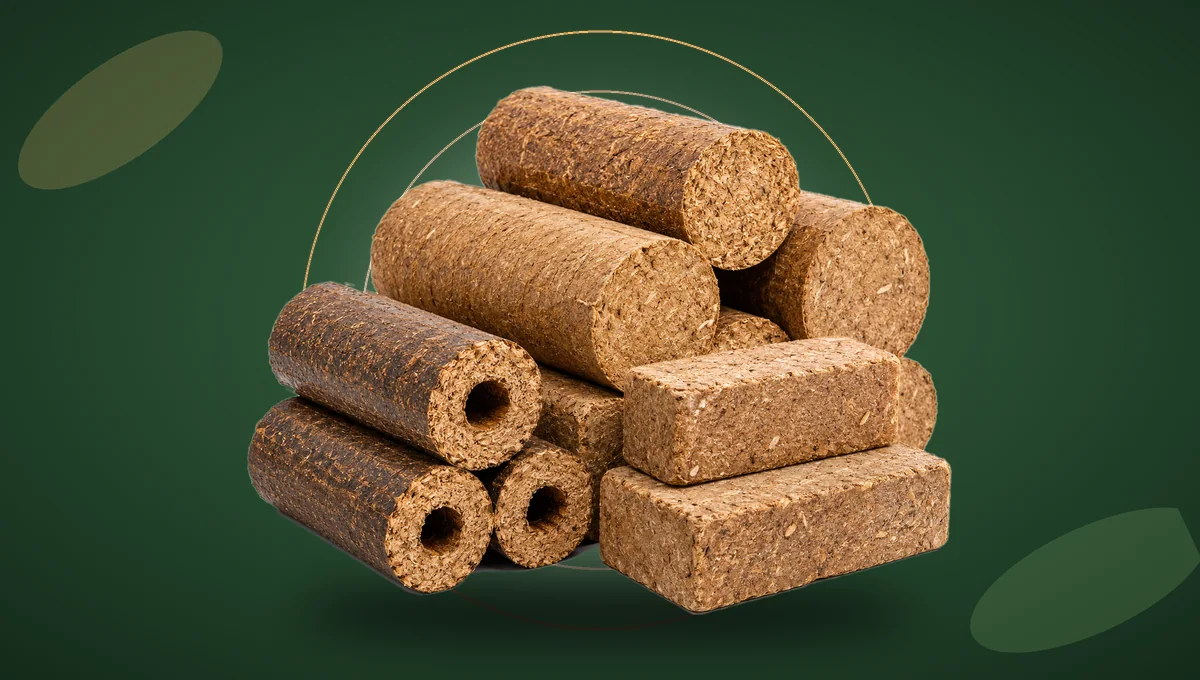


“White coal” is the trade name for biomass briquettes — solid fuel logs made from agricultural and forest residue. They do the job of coal in boilers and furnaces, but come from renewable material that would otherwise be burnt in the field or dumped.
How briquettes are made
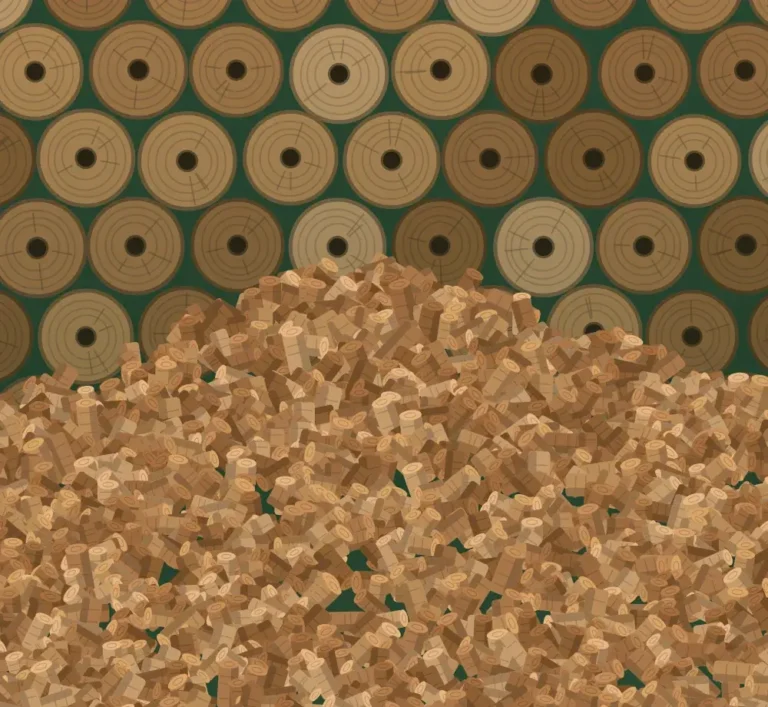
Residue such as groundnut shells, cotton stalks, sawdust and husk is dried and crushed to a uniform size. It is then pressed in a briquetting machine at very high pressure. The pressure and heat release the natural lignin in the material, which binds it into a dense log — no chemical binders are needed.
What briquettes are made from
- Groundnut shell
- Cotton stalk
- Sawdust and wood waste
- Castor and mustard husk
- Other agro residue, depending on the season
The blend affects calorific value, ash and moisture, so always ask your supplier for a test report on the material you will actually receive.
Common sizes
Briquettes are usually 60, 70 or 90 mm in diameter. Smaller sizes suit small boilers and commercial kitchens; 90 mm is the standard for industrial boilers and furnaces.
Where briquettes replace coal and firewood
- Industrial steam boilers — grate-fired and manually fed boilers.
- Furnaces and foundries — melting, forging and heat treatment.
- Brick kilns and ceramics — long, steady burn for firing.
- Textile, food and agro processing — steam and drying.
Briquettes or pellets?
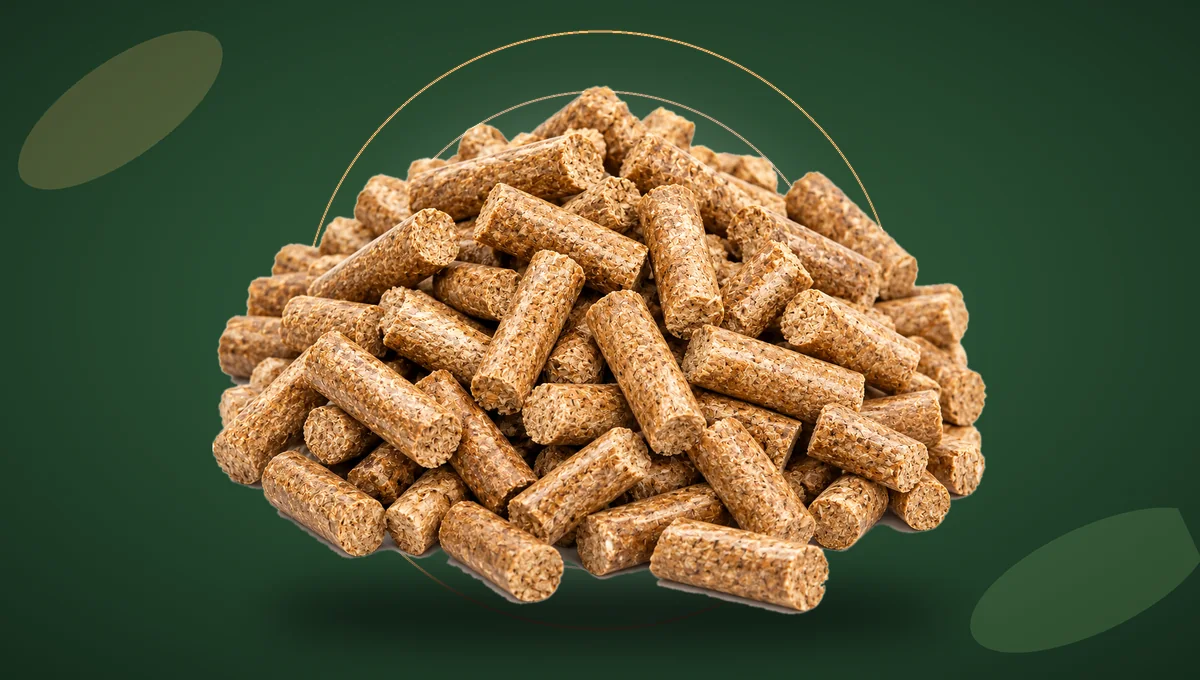
Briquettes suit manually fed and grate-fired systems. Pellets (6–10 mm) suit automatic feeding and pellet burners. If you are not sure which your boiler needs, ask our team.
Thinking of switching to briquettes?
Ask for a trial lot and test it in your own boiler.